Using AI in your Business Operations & Classrooms

Updated: Jun 22
When AI Helps and When It Hurts
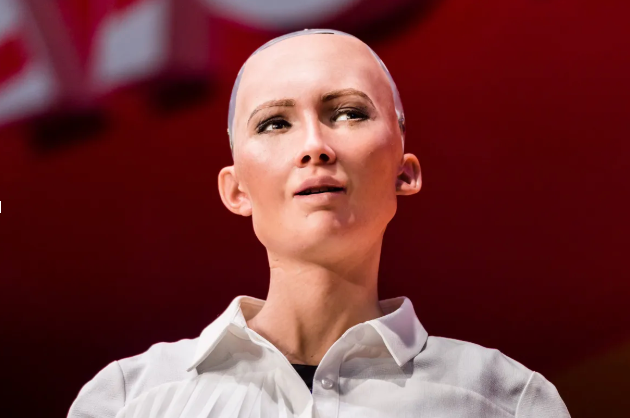
"Sophia," created by Hanson Robotics, attends the RISE Conference at the Hong Kong Convention and Exhibition Centre on July 12, 2017.
(Image credit: studioEAST/Getty)
In a world where AI is rapidly evolving and misinformation continues to spread, it’s becoming increasingly important to validate our data, sources, and references. AI has emerged as a powerful tool that helps individuals and organizations streamline workflows, increase efficiency, and eliminate repetitive tasks. As its use becomes more widespread, the debate around AI continues: Is AI helping society move forward, or is it creating more problems than it solves?
When it comes to what people think about AI and the impact on their lives, the results do vary. For example…
Opponent Perspective: According to Pew Research, 43% of Americans believe AI will harm them personally, while only 24% believe it will benefit them. Concerns include misinformation, job displacement, and a lack of transparency in how AI systems make decisions.
Advocate Perspective: Research from Atlassian found that 71% of knowledge workers who use AI report working faster, highlighting AI’s ability to improve productivity and reduce administrative burdens.
Neutral Perspective: A 2025 Stanford AI Index Report found that approximately two-thirds of people believe AI-powered products and services will significantly impact their daily lives within the next three to five years.
While there is much debate surrounding whether AI is helpful or harmful, one thing is clear: AI is here to stay.
As business leaders, educators, and community builders, it is our responsibility to understand both the ethical implications and practical applications of AI. Below are a few examples of when AI can be used effectively—and responsibly.
WHEN TO USE AI

According to Airbyte, there are 8 key benefits of AI workflow automation (Listed below)
Increased Efficiency and Productivity
Improved Accuracy and Consistency
Stability and Flexibility
Enhanced Compliance and Audit Trails
Better Customer Experience
Enhanced Collaboration and Communication
Cost Savings
Data-Driven Insights
At Peeples & Co., we understand that the balance between a human-first approach to operations and AI is necessary. Some of our best practices for using AI are…
Use AI to Automate Client Reminders and Follow-Up Workflows
If you operate a service-based business where customers need recurring appointments, maintenance, renewals, or check-ins, AI can help automate reminders based on predetermined timelines and customer behavior.
For example, a wellness provider could automatically remind clients when it's time to schedule their next appointment. A real estate professional could create follow-up workflows to check in with past clients at 6 months, 1 year, and beyond. These systems help businesses stay consistent without requiring manual tracking.
Setting this up may sound intimidating, but AI-informed platforms such as Zapier make automation significantly more accessible. Zapier's AI tools can help business owners build automated workflows faster—often without requiring a back-end engineer.
Use AI to Reduce Administrative Work and Summarize Meetings
Many professionals spend hours each week taking notes, documenting action items, and following up after meetings. AI can help reduce this burden by automatically transcribing conversations, identifying key themes, summarizing decisions, and generating action-item lists.
This allows leaders and teams to spend less time on administrative tasks and more time on strategic thinking, collaboration, and execution.
Tools such as Otter AI are excellent examples of technology that can help teams capture conversations and summarize important information quickly and accurately.
Use AI to Analyze Data and Identify Patterns
AI can help organizations process large amounts of information faster than traditional manual methods. Whether you're reviewing customer feedback, survey responses, engagement metrics, or learning outcomes, AI can help identify patterns and trends that may otherwise go unnoticed.
However, AI should assist decision-making—not replace it. Human expertise, context, and critical thinking remain essential when interpreting data and determining the best course of action.
According to Workera, “Using GenAI increases productivity by 150%.” Additionally, generative AI saved respondents 5.7-6.8 hours on tasks that would have taken roughly 10 hours without AI. In other words, 10-hour tasks took 3.1-4.2 hours with generative AI assistance. These tasks included, but weren’t limited to, idea generation, simple data analysis, algorithm exploration, language translation, drafting emails, and coding and debugging.
WHEN NOT TO USE AI

Do Not Use AI as a Replacement for Critical Thinking
AI can generate responses quickly, but speed should never replace sound judgment. Information generated by AI should be verified using credible sources, especially when making business, educational, financial, or policy-related decisions.
Duke’s Center for Teaching and Learning, or Duke’s CTL, quotes Matteo Wong, a technology journalist at The Atlantic, who stated that “[AI] could completely reorient our relationship to knowledge, prioritizing rapid, detailed, abridged answers over a deep understanding and the consideration of varied sources and viewpoints.” Wong wants people to realize that AI is creating a relationship that prioritizes quick, shallow answers over learning the full scope of topics researched through AI tools. That is not to say that AI users can’t dive deeper; Wong is just highlighting a trend with AI usage in general. Additionally, Duke’s CTL also elaborates on the fact that…
“Critical thinking–characterized by evaluation of information, questioning of assumptions, and formation of independent judgments–remains a uniquely human skill that AI cannot fully replicate. Instead of serving as a replacement for human reasoning, AI should function as a tool to enhance it. Students need to be aware of AI’s limitations, biases, and errors, ensuring they do not outsource their judgment to AI-generated content uncritically.”
What we hope to communicate by providing the above quote is that when considering academia, it is important to have your own information literacy and critical thinking skills so you can also equip yourself with tools that will allow you to navigate flaws within prompts being used to get responses from AI but also to identify areas where the AI is falling short or lacking in depth and criticality.
Lastly, data analysis is pertinent to having a successful business. With that in mind, we want to highlight that Duke’s CTL also stated that “While AI enables rapid data analysis at an unprecedented speed and scale, overreliance on AI can erode an individual’s critical thinking skills.” In other words, companies in the corporate world operate in such a fast-paced and competitive environment that, in order to stay ahead, they need people at every level who can interpret data and turn that data into strategies, actions, and results.
Do Not Use AI to Create Content Without Fact-Checking
AI systems can occasionally produce inaccurate information, outdated statistics, or fabricated references. Before publishing reports, presentations, social media posts, or educational materials, it is important to validate claims using reputable sources.
AI can also hallucinate and operate in ways it was not originally designed to. According to IBM.com, “AI hallucination is a phenomenon where, in a large language model (LLM) often a generative AI chatbot or computer vision tool, perceives patterns or objects that are nonexistent or imperceptible to human observers, creating outputs that are nonsensical or altogether inaccurate.”
According to Forbes, Anthropic reports that 91.3% of people who use AI for information do not fact-check it once they receive the information. This is problematic due to the nature of AI and how it gathers information, including a lack of validity auditing.
Do Not Use AI to Replace Human Relationships
Strong businesses and learning environments are built on trust, empathy, and authentic human connection. While AI can support communication and efficiency, it cannot replace meaningful conversations, relationship building, coaching, mentorship, or community engagement.
Figure 1: “12 HUMAN SKILLS AI CAN'T REPLACE” via AI For Leaders on LinkedIn.
How We Can Help
Running a business, developing curriculum, or leading organizational change can feel overwhelming. The good news is that you don't have to navigate it alone.
At Peeples & Co., we partner with small business owners, nonprofit leaders, and educators to create sustainable, data-informed solutions that drive meaningful outcomes. Whether you're looking to improve customer retention, strengthen your brand, develop an impactful curriculum, or make better use of your data, we bring both research credibility and practical experience to the table.
If you'd like to learn more about our services, click here.
As AI continues to evolve, the importance of data validation and critical thinking has never been greater. AI can help us work smarter, but only when paired with thoughtful decision-making, ethical practices, and a commitment to verifying information before acting on it.
Written by Regis Peeples on published on Sunday, June 21st


Comments